
A Tea Sets China teaware guide Updated
A fairness pitcher, also called a gong dao bei or tea serving pitcher, receives brewed tea before you pour it into drinking cups.
Collecting one infusion before dividing it helps make the tea served into different cups more consistent. It also lets you finish transferring the tea out of the brewer before serving the group.
The basic sequence
Brew in the pot or bowl transfer to the pitcher serve into cups.
Where the set uses a separate tea filter, place it in the transfer path as shown for that configuration.
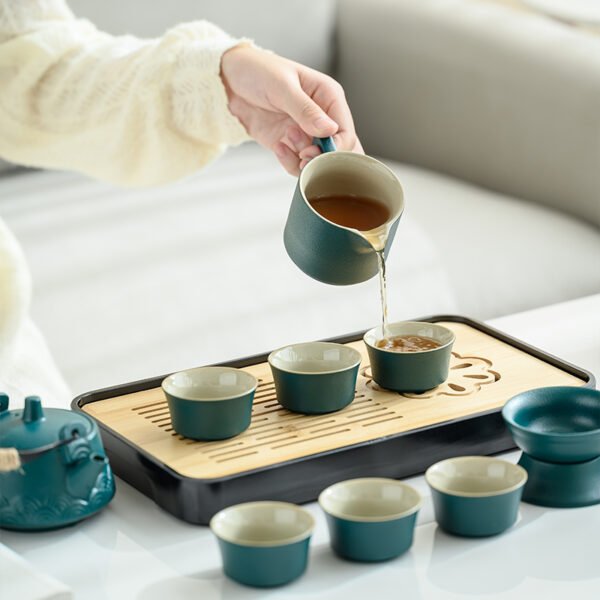
Why is it called a fairness pitcher?
The name describes its purpose: collect an infusion in one vessel, let that tea mix, then divide it among the cups. When tea is poured directly from a brewer into cups one after another, the first and last portions can differ as the leaves continue to infuse during the pour.
A pitcher helps reduce those cup-to-cup strength differences by combining the infusion before serving. It does not automatically make poured amounts equal or guarantee identical taste; you still decide how much goes into each cup.
It also separates two jobs: the brewer holds the leaves during infusion, while the pitcher holds the collected tea for serving. A separate strainer has another job again—catching leaf particles during that transfer.
How to use a gong dao bei
- Arrange the serving path. Put the pitcher on a stable surface with room for the cups. If your set has a separate filter and stand, check how they fit together before brewing.
- Brew in the intended vessel. Use the teapot, brewing bowl or infuser according to its instructions. Choose water temperature and infusion time for the tea and equipment you are using.
- Transfer the brewed tea. Pour into the pitcher, using the filter where appropriate. Watch the receiving level and leave room below the rim.
- Serve from the pitcher. Hold the handle or the grip specified for that item and pour manageable portions into the cups. Keep the spout and pouring hand clear of other people.
- Prepare for the next infusion. Empty the pitcher before adding another infusion if you want to keep the batches separate.
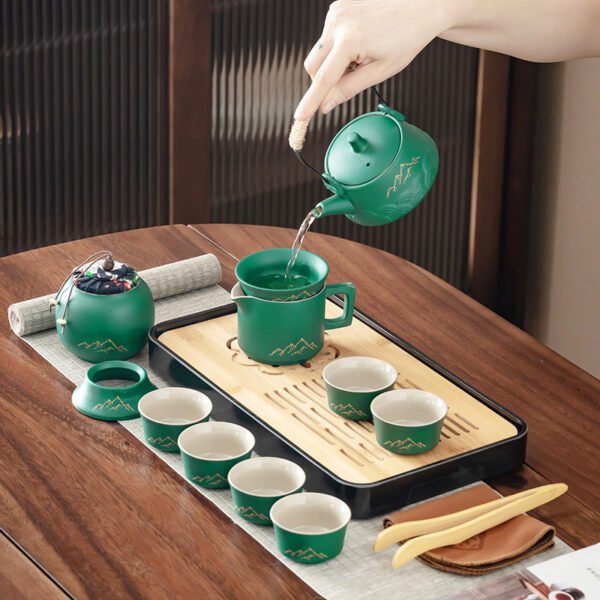
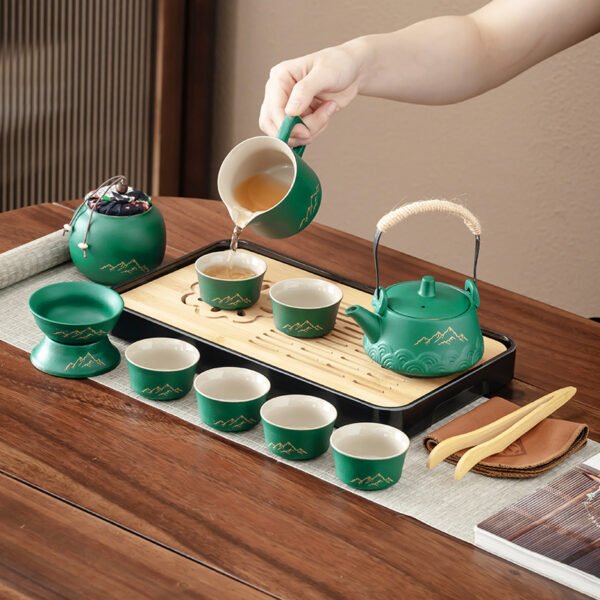
The filter catches particles during transfer; the pitcher receives the batch and then serves the cups.
Match pitcher capacity to the tea you transfer
Check the brewer and pitcher figures separately. Being part of the same set does not mean they have identical listed capacities.
Swipe or scroll sideways to compare every column.
| Set | Listed teapot capacity | Listed pitcher capacity |
|---|---|---|
| Teal ceramic travel set | 230 ml | 150 ml |
| Green ceramic travel set | 200 ml | 160 ml |
Use the amount of liquid, not the matching appearance
A 160 ml pitcher cannot receive 200 ml of liquid in one transfer. However, a teapot’s listed capacity alone does not tell you how much liquid you will pour: tea leaves, fill level and pouring space affect the working volume.
Compare the collected batch with the pitcher’s usable receiving space. A cool-water rehearsal helps you understand the fill relationship before a tea session. For portion arithmetic, use the serving calculator with the actual available amounts.
Ask whether the stated figures are brimful or intended working capacities when that distinction is important. Keep a tea jar’s storage capacity separate from these brewing and serving measurements.
What to check when choosing a pitcher
- Capacity: enough receiving space for the amount you intend to transfer, with room below the rim.
- Grip and pour: the handle or designated grip, access around the lid or filter, and the direction of the spout.
- Dimensions: fit on your tray, under any separate filter and inside the carrying case.
- Material and care: the information for the pitcher itself, including any decoration. Check cleaning and heat-use instructions for that component.
- Included parts: whether the pitcher, filter and stand are supplied together or as distinct items.
For a travel setup, inspect the packed layout as well as the tea-table view. The replacement-parts guide shows how to describe a pitcher’s dimensions and fit. For the whole layout, continue with the travel tea set selection guide.
Common questions
Do I need a fairness pitcher?
It is useful when you want to collect one infusion before sharing it among several cups, or finish decanting before you start serving. It is not a universal requirement: some brewing designs serve directly into cups, and a single-cup session may not need a separate distribution vessel.
Can I pour directly from the brewer into cups?
Yes, where that is the brewer’s intended pouring arrangement. Use its specified grip and handling method and leave manageable space in each cup. Successive cups can receive different parts of the infusion; collecting the batch in a pitcher first is one way to reduce that difference.
Is a fairness pitcher the same as a tea filter?
No. A pitcher receives brewed tea for serving; a filter catches leaf particles. The pictured green set uses a separate filter above the pitcher, while other brewers have their own filtering features.
Choose a serving layout that fits your tea session
Explore the current sets, or send us a product link and the brewing and serving capacities you want to confirm. Include quantity and destination when requesting pricing and shipping.
Product examples: capacities and photographs come from the linked Tea Sets China listings, rechecked on 28 October 2026. The explanation describes the pitcher’s common serving role; listed capacities are not measured tea yields.