
A Tea Sets China serving guide Updated
Plan a round of small-cup tea by entering the number of cups, your chosen pour per cup and the tea actually available in each batch.
Use a planned cup pour and an available batch amount. The product’s listed capacity is useful context, but the liquid you can actually collect and serve is the relevant calculator input.
Tea set capacity calculator
Use your own serving amounts. “Tea per batch” means liquid available to serve, rather than the capacity printed on a teapot listing.
The starting values are an illustrative example, not a measured yield for a product.
Example results
Illustrative example: 4 cups × 30 ml per cup; 150 ml of brewed tea per batch; no pitcher space entered.
- Total tea for one round
- Approx. equal share per cup
- Batches by total volume
Pitcher check skipped. Enter its available receiving space if you want a volume comparison.
Batch count is based on total volume. It assumes the same servable amount in each batch and allows portions to be distributed across cups. It does not predict how many infusions the leaves can make.
The pitcher check only compares the volumes you enter; it does not assess the equipment or a transfer method.
What the three results mean
Tea needed for one round is the number of cups multiplied by your planned pour. Four cups receiving 30 ml each require 120 ml altogether.
Equal share of one batch is the available batch divided by the cup count. A 150 ml batch shared equally between four cups gives a theoretical 37.5 ml per cup. Compare this with each cup’s usable capacity; it is an arithmetic share, not a recommended fill amount.
Batches by total volume divides the amount needed by the available amount per batch and rounds up. It assumes the batches provide the same usable volume and that you can distribute smaller pours across cups.
An example that explains the rounding
Five cups with a planned 50 ml pour need 250 ml. At 90 ml per batch, the calculation is 250 ÷ 90, rounded up = 3 batches. Three batches provide 270 ml in total.
This counts total liquid. It does not mean every cup can receive its whole 50 ml from a single batch, or that tea leaves will provide three suitable infusions. Decide how you want to portion the tea between cups and batches.
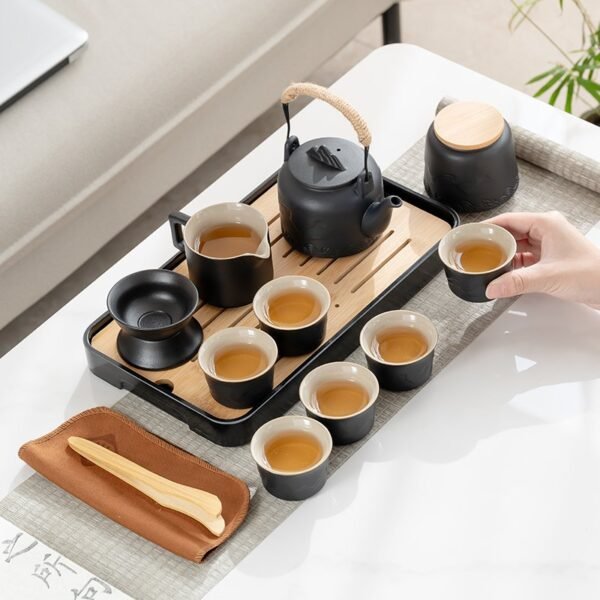
Choose a pour and a usable batch amount
Your planned pour can be smaller than the cup’s listed capacity. Use an amount that suits the cup’s usable fill level and the way you want to serve tea.
For the batch input, use the brewed liquid available for serving. Space taken by leaves, fill level and liquid retained during transfer can make that different from a vessel’s catalog rating.
For your own input record: note the component, fill level, units and method. The tool does not predict leaf absorption, extraction, strength or flavour.
- Choose the cup pour. A cool-water rehearsal can help: fill the clean cup to the level you intend to serve, then read that amount with a graduated measure. Record the level as well as the millilitres.
- Identify the available batch. Record the liquid actually collected for serving with your chosen brewing method. A cool-water capacity rehearsal is not a measurement of brewed-tea yield.
- Keep assumptions visible. If the batch amount is still an estimate, label it as planned. Recalculate with the observed amount when available.
Use the care and handling instructions for the equipment involved.
Read real product specifications alongside the calculation
These listings show why cup count, cup capacity and brewing capacity should be read as separate fields.
Swipe or scroll sideways to compare every column.
| Configuration | Cups | Listed cup capacity | Listed brewing capacity |
|---|---|---|---|
| Stackable set | 3 | 50 ml | 145 ml |
| Teal infuser set | 4 | 45 ml | 260 ml |
| Mountain-relief set | 6 | 50 ml | 260 ml |
| Teal ceramic set | 8 | 45 ml | 230 ml |
These catalogue values provide context; they are not loaded as measured tea-yield presets.
For example, eight cups at their listed 45 ml capacity total 360 ml, while that set lists a 230 ml teapot. A serving plan can use smaller pours or additional batches. The cup count describes the supplied cups, rather than a promise to fill them all to their listed capacities at once.
The travel tea set selection guide covers the complete configuration and carrying layout. The tea set pieces guide helps separate brewing, serving and storage components.
Check the receiving pitcher separately
The optional pitcher input checks the receiving space you enter against the batch amount. Enter the space available below your chosen working fill level, accounting for any liquid already in the pitcher.
If the batch is 150 ml and the available receiving space is 120 ml, the difference is 30 ml. The input comparison flags that mismatch; choosing an appropriate vessel and transfer arrangement remains a separate equipment decision.
See the fairness pitcher guide for its place in the serving sequence. Different infuser and strainer layouts can involve different brewing and receiving parts.
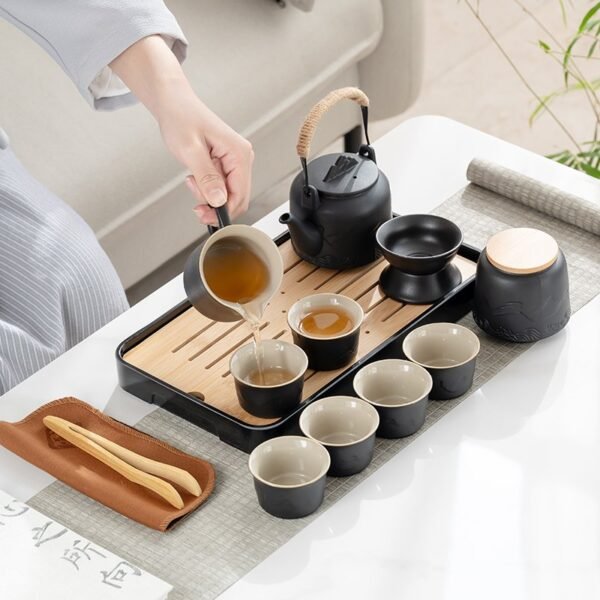
Turn the numbers into a clear serving plan
- Confirm the cups. Use the cup count for the actual configuration, then choose a pour within the cups’ usable capacity.
- Enter an available batch amount. Keep measured or planned serving liquid separate from the product’s listed vessel capacity.
- Read the total-volume result. Decide how smaller pours will be distributed if one batch does not cover the whole round.
- Check receiving space. Include any pitcher or other receiving vessel used in the transfer.
- Keep brewing decisions separate. Temperature, infusion time and repeat infusions depend on the tea, equipment and instructions; they are outside this calculation.
For a group gift or larger order, record the configuration and questions together. The corporate tea gift guide includes a copyable enquiry brief.
Find a configuration for your way of serving tea
Compare the current sets. For capacity or contents questions, send the product link, cup count, preferred configuration and the quantities you want to confirm.
Sources and method: product counts, capacities and photographs come from the linked Tea Sets China listings, rechecked on 28 October 2026. The calculator uses entered quantities and the arithmetic shown above; the measurement steps describe how readers can record their own inputs, not a test performed on these products.