
A Tea Sets China teaware guide Updated
A tea infuser holds leaves as part of the brewing arrangement. A separate pour-through tea strainer catches leaf particles while brewed tea moves between vessels.
The useful distinction is where the leaves sit and when the filter is used. Product listings may use “filter” for either item, so inspect the actual parts and pouring photographs.
Identify the layout in three checks
- Find the part that holds the leaves during brewing.
- Trace where the tea goes when it leaves the brewer.
- Check how the insert, lid, pitcher and stand fit together.
Tea infuser and tea strainer: compare the jobs
Follow the leaves and liquid through each path:
Lift-out infuser
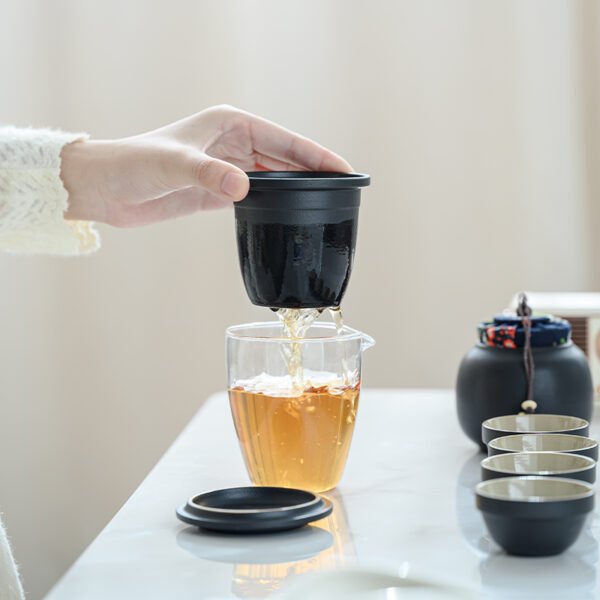
Leaves stay in the insert during brewing. Lift the insert; liquid drains into the matched outer vessel, which serves the cups.
Leaves in insert → outer vessel → cups
Pour-through strainer
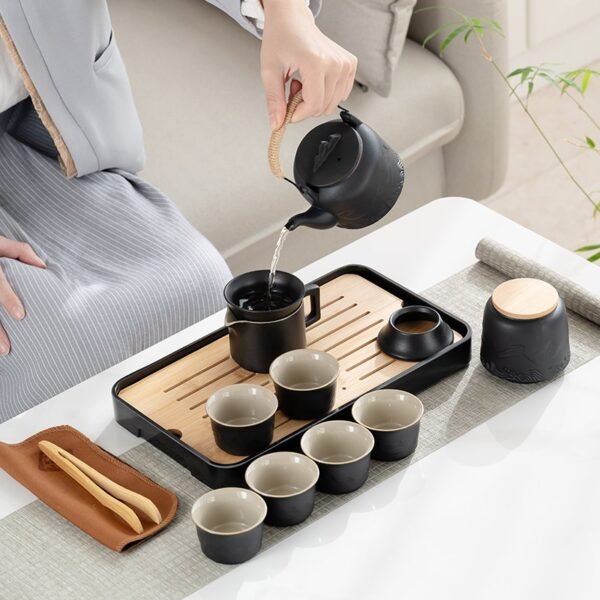
Leaves brew in the pot. During pouring, a separate strainer catches escaping particles over the pitcher, which then serves the cups.
Teapot → strainer → pitcher → cups
The paths describe the photographed arrangements; the table separates their jobs.
Swipe or scroll sideways to compare every column.
| What to identify | Removable infuser | Separate pour-through strainer |
|---|---|---|
| Where the leaves sit | In the removable insert used for brewing. | Primarily in the separate teapot; the strainer catches particles during transfer. |
| When filtering happens | Within the brewing arrangement and as liquid drains from the lifted insert. | As brewed tea is poured through the strainer into a receiving vessel. |
| Parts to match | Insert, outer vessel and lid. | Strainer, pitcher opening and any supplied stand. |
| Handling question | How to lift the insert and where to put it between brews. | How the strainer rests over the pitcher and where it sits between pours. |
The functional comparison does not provide a filter-opening measurement or a test of filtering effectiveness.
How the lift-out infuser arrangement works
The insert holds the leaves as part of brewing. Its openings allow liquid to pass between the insert and the surrounding vessel. Lifting it separates the contained leaves from the liquid collected below.
In the pictured set, the clear outer vessel is also used for pouring tea into cups. The insert and outer vessel have different roles even though they nest together.
Before choosing this layout, look at the insert’s lifting method, how the lid fits and where the wet insert can be placed. Use the grip and handling method specified for that product.
How the pour-through strainer arrangement works
Here, tea is brewed in a separate teapot. During transfer, the liquid passes through a strainer positioned above the fairness pitcher. The strainer intercepts leaf particles while the pitcher receives the tea.
The pictured mountain-relief configuration includes a separate strainer and stand. Check how the strainer rests over the pitcher and where its stand sits on the table or tray.
The pitcher adds a serving stage of its own. See the fairness pitcher guide for the transfer-and-serving sequence and capacity questions.
Choose the arrangement you want to handle
If you prefer a lift-out insert
In the pictured arrangement, the matched outer vessel collects and serves the tea. You lift the wet insert between brewing and serving, so plan its resting position as well as the lid and outer-vessel fit.
If you prefer a separate teapot and pitcher
The pictured layout has a separate transfer stage: pot to strainer to pitcher. It includes a stand for the strainer, so the table arrangement needs a place for both the receiving pitcher and resting filter.
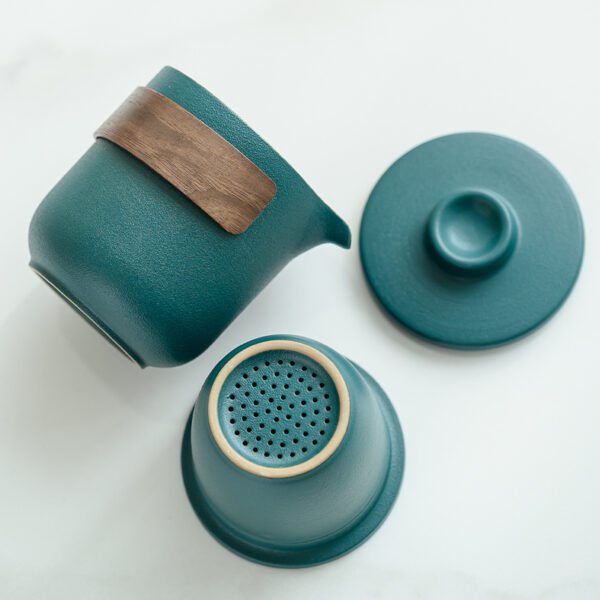
Compare the number of parts you will handle, clean and pack. Also check cup count and the listed contents: the teal infuser example supplies four cups, while the mountain-relief example supplies six. Those are product configurations, not rules about which filter type can serve a group.
For the other vessels and accessories, the tea set pieces guide explains their roles. The travel tea set guide helps compare the complete layout and carrying requirements.
Match the parts before ordering a replacement
Begin with the product link or an accurate description of the existing set. For an insert, compare its height, width and seating rim with the outer vessel, and check the lid relationship. For a separate strainer, compare its support points and dimensions with the receiving opening and stand.
Use the replacement-parts measurement guide to label those seating points and dimensions. Include the existing set and component reference when asking about compatibility and availability.
Check the filtering requirement as well as the fit
The teal insert photograph shows visible holes in its base. That view helps identify the part, but it does not establish an opening-size specification or how it handles every leaf size.
If fine particles matter for the tea you use, ask about the supplied filter’s openings and relevant product information. Use the care instructions for each component and finish rather than assuming every part can be cleaned or heated in the same way.
A short checklist for your enquiry
- Exact layout: the product link, preferred finish and the brewing/filter arrangement you want.
- Included parts: insert or strainer, lid, outer vessel or pitcher, stand, cups and case as applicable.
- Compatibility: the measurements needed for any proposed replacement or extra component.
- Use details: relevant material, filter-opening and care information.
- Quotation: quantity, destination and any questions that still need confirmation.
For a gift project, keep the selected filter layout in the same configuration brief as the case and accessories. The corporate tea gift guide includes a copyable enquiry brief.
Compare a complete set or ask about its filter parts
Explore the current sets, then send the product link and identify the insert, strainer or matching part you want to confirm.
Product examples: descriptions and photographs use the linked Tea Sets China listings, rechecked on 28 October 2026. The paths describe these particular assemblies. Material, opening size, compatibility and care need component-specific information; no filtration or flavour test is claimed.