
A Tea Sets China teaware guide Updated
To request a replacement tea set part, identify the original configuration, show where the part fits and provide clearly labelled measurements. Then confirm compatibility and separate-part availability before ordering.
A similar colour, matching capacity or familiar shape can help you describe the item. None of those details, on its own, establishes that a cup, lid or filter belongs with your existing set.
Start your matching brief with three things
- The original product link or order reference.
- Photographs of the part and the piece it fits.
- Measurements with units and the exact points measured.
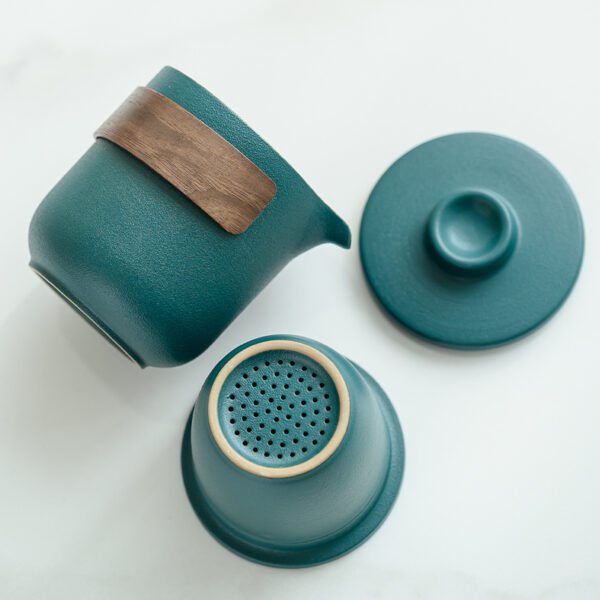
1. Identify the original set and the exact component
Begin with the product link, SKU if available, or original order reference. Add a photograph of your existing set and its selected finish. If you bought a different version from the one currently shown, explain that difference.
Name the piece you need: the teapot lid, one cup, the removable brewing insert, the outer pouring vessel or a separate strainer. The tea set pieces guide can help distinguish components that are sometimes grouped together in a listing.
Part identity
Which component and finish are you trying to match?
Assembly fit
Which opening, rim, seat or other part must it work with?
Storage fit
Must it also stack, nest or occupy a fitted case compartment?
Keep those requirements separate. A description such as “one more 50 ml cup” gives a listed-capacity reference, but it does not identify the cup’s shape or its relationship to the case.
2. Show the matching surfaces, not just the front view
Use clear photographs of the existing clean, dry pieces. Include a view of the whole item and close views of the features that meet. If the original part is missing, show the opening or compartment it must fit and any earlier photograph you have.
- Lids: show the vessel opening and seating rim. If you still have the lid, photograph its top, underside and the edge that seats in or on the vessel.
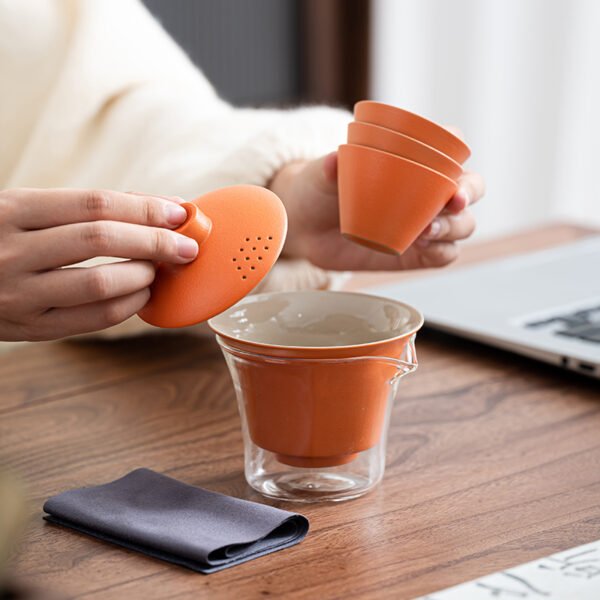
- Cups: show the mouth, side profile and base. For stacked storage, include the relationship between adjacent cups.
- Inserts and strainers: show the supporting rim or points, the receiving opening, depth and any relationship with a lid or stand.
- Case or tray fit: show the relevant compartment or placement area and the parts that share it.
Label the points as well as the units. The drawing below shows why “diameter” alone can be ambiguous: the outside rim, clear opening and contact edge are different references. Add overall height or insert depth where relevant, and ask which interfaces the proposed part needs to match.
3. Treat capacity as one field, not a part identifier
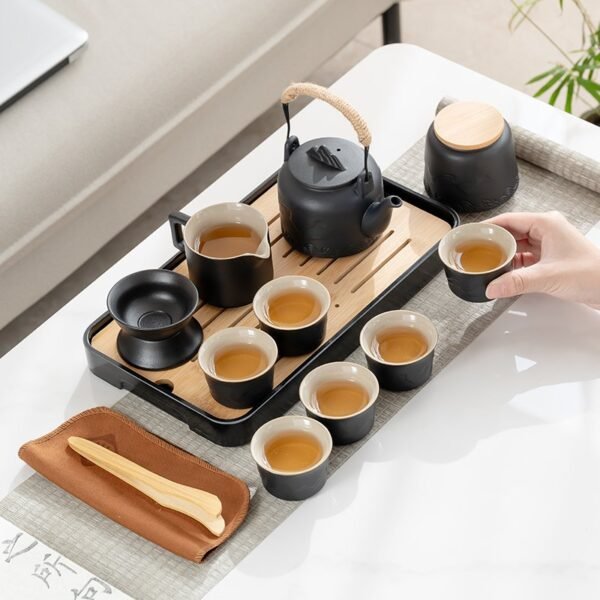
The two examples below both list 50 ml cups. They belong to different configurations and use different dimension labels. Those entries help identify questions to ask; they do not establish interchangeability.
The stackable set specifically labels 5.5 cm as rim diameter. The mountain-relief set labels 6 cm simply as diameter. Preserve that distinction when collecting the additional interface measurements.
Compare the labelled references, profile and base against the assembly and storage requirements. A shared 50 ml label is useful for describing capacity, not for identifying a compatible part.
On a small screen, scroll the table sideways to read every column.
| Set example | Volume | Listed size | Measurement label |
|---|---|---|---|
| Stackable three-cup set | 50 ml | 5.5 × 4.2 cm | Rim diameter × height |
| Mountain-relief six-cup set | 50 ml | 6 × 4 cm | Diameter × height; rim reference not stated |
4. Check the assembled set and its packed arrangement
A replacement can affect more than one relationship. A lid meets a vessel; an insert sits within an outer vessel and may also meet a lid. A cup may need to match both its neighbouring cups and a fitted case space.
For the stackable example, request the full packed view as well as the shown cup stack and nested brewer. That final view must account for every cup and lid before case fit can be assessed.
The infuser and strainer guide explains the difference between a removable brewing insert and a separate pour-through strainer. Identify the arrangement before asking for a matching filter component.
For an agreed replacement, follow the supplied fitting and use instructions. Check the intended dry assembly and storage position without forcing the pieces. The packing guide covers the broader case check.
5. Send a matching brief the supplier can assess
A matching-part enquiry you can reuse
Select and copy this text, then replace the bracketed fields. Attach the referenced photographs separately.
Original set / order reference: [link, SKU or reference]
Part, quantity and finish needed: [details]
Photos attached: [whole set, matching surfaces, case position]
Measurements and units: [outside-rim width and clear-opening width, with the exact points marked; overall height or relevant depth]
Contact surface: [labelled close-up of the seating edge; ask which additional seat dimensions are needed]
Other fit requirements: [lid, stack, nesting, stand or case]
Delivery destination: [country / postal code]
Please confirm availability, compatibility, any further
measurements needed, and the part and shipping quotation.
If an exact visual match matters, identify the finish as a requirement in the same brief. Ask how the proposed part will be compared with your existing pieces; a similar-looking product photograph is not a confirmed match.
6. Confirm the proposed part before ordering
Ask the reply to identify the proposed component and the set or assembly it is intended for. Resolve unclear measurements and any change in finish, construction or packing fit. Confirm component-specific use and care information as well as availability and the quotation.
Keep the answer with the original configuration
Save the product reference, photographs, measurements and the written matching decision together. If a proposed part differs from the original, record what changed and which requirements were confirmed.
Can I match a lid using the teapot’s capacity?
No. A capacity figure does not describe the opening or the lid’s seating shape. Identify the exact vessel and ask which interface measurements are needed.
Does a similar cup size guarantee it will stack?
No. The rim, body profile and base relationship also matter. Confirm the intended stack and case fit rather than assuming a capacity or overall dimension establishes them.
Are spare parts sold separately for every set?
Separate-part availability needs to be checked for the selected model. This guide explains the information to provide; the pictured configurations do not establish a catalogue of interchangeable spare parts.
Start with the original set and the part you need
Send the product link and matching brief. Ask whether the requested component is available separately and what further information is needed to assess its fit.
Sources and scope: linked listings and existing photographs, reviewed on 28 October 2026. The instructional drawing is generic and not to scale. No cross-set fitting tests or separate-part availability are established by this guide.