
A Tea Sets China buying guide Updated
Before approving a tea set sample for a bulk order, compare it with a written configuration: the exact vessels, cup count, finish, dimensions, decoration and packing.
A sample gives you something specific to examine. Its value comes from recording what matches, what differs and what remains unconfirmed—not simply deciding that the set looks attractive.
Your review should end with three records
- A dated specification and contents list.
- Photographs and notes tied to that sample.
- A written decision, including any outstanding changes.
Download the sample review record
Use the fillable PDF in a PDF reader, or print it. Keep the sample reference, specification revision, observations, photo references, decision and open changes in one record.
In the PDF’s Product / configuration / selected finish field, include the dated specification or revision reference. Keep the contents list and any artwork or packing records used for the review with the completed worksheet.
Download sample review record · PDFA buyer review worksheet, not a test certificate or an inspection standard. The fields start blank; record only what you have actually checked.
1. Agree what the sample represents
Before requesting a sample, identify the product link or SKU, vessel type, finish, cup count and complete packing list. If you are still choosing a configuration, start with the travel tea set buying guide.
Ask which features the proposed sample will represent. A standard set may show the shape and case arrangement without demonstrating your proposed logo, colour or final presentation packaging. List those differences before dispatch.
Keep a dated copy of the specification and quotation. Record sample availability, price, shipping and timing separately from the bulk-order terms.
2. Unpack, photograph and count
Photograph the parcel and any visible arrival damage, then retain the packaging while you review the set. Lay out the supplied parts and count them against the written list.
Count cups separately from the overall piece count. Also identify lids, inserts, strainers, stands and smaller accessories. The tea set pieces guide helps distinguish their roles.
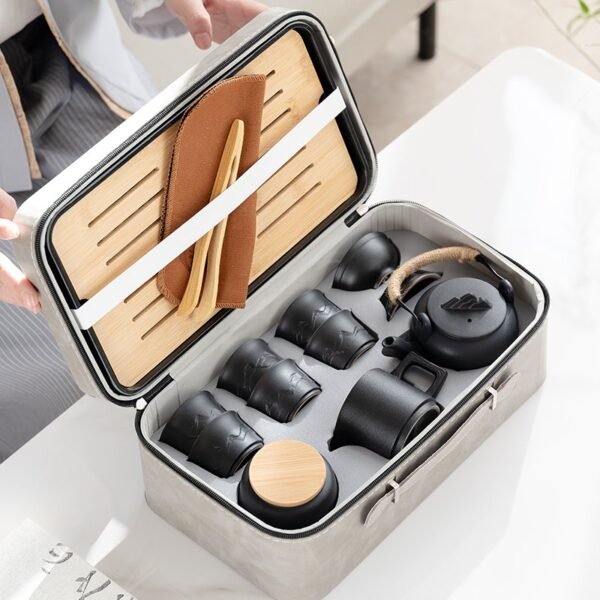
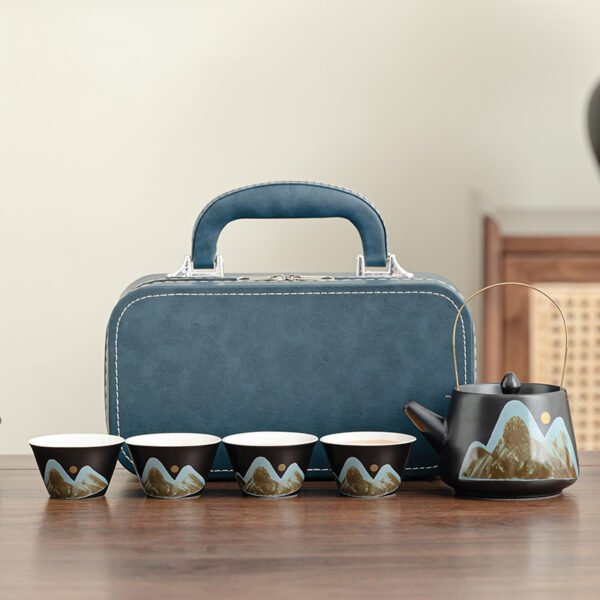
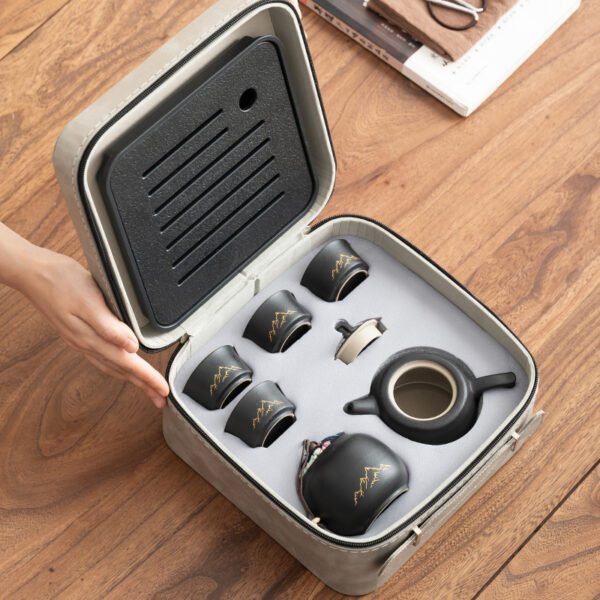
Use the selected configuration, not another similar-looking set. The mountain-relief example above supplies six cups and separate serving accessories. The blue-case example here supplies four cups and has a shorter contents list.
Mark each listed item as present, missing, extra or different, and attach a photo reference to each difference.
3. Check the set and record the evidence
Use the same checklist for each sample. Describe what you actually observe and compare it with the agreed requirements. This is a buyer review record, not a laboratory test or a formal inspection standard.
Swipe or scroll sideways to compare every column.
| Check | What to record | What to resolve |
|---|---|---|
| Configuration | Product reference, finish, cup count and each supplied component. | Any substitution, missing item or difference from the dated list. |
| Visible condition | Clear views of rims, spout, handles, lid and finish; close-ups of chips, cracks or marks you find. | Whether each observation meets the agreed appearance requirements. |
| Part fit | How the lid, removable insert, strainer, stand and nesting parts sit together, as applicable. | Unexpected movement, interference or a part that does not seat as described. |
| Measurements | Which component was measured, the unit, reference points and method. | Unclear dimension labels, missing measurements or differences requiring an agreed tolerance. |
| Decoration | Artwork revision, placement, orientation and the finish shown by the sample. | Anything the sample does not represent, including proposed custom work. |
| Case and packing | Part placement, separators, closure, labels and the packaging actually received. | Any difference between sample packing and the proposed production shipment. |
Check the fit before handling the set in use
Start with the clean, dry parts. Check their intended placement without forcing them together. For the filter arrangement, identify whether it is a removable brewing insert or a separate pour-through strainer; our infuser and strainer comparison shows both.
If evaluating pouring or brewing, first obtain the relevant use and care instructions. Do not infer heat resistance, microwave or dishwasher suitability, or food-contact compliance from appearance. Ask for the component-specific information and any documents required for your intended market.
Keep capacity definitions separate
Label a capacity figure with its component and measurement basis. A listed teapot capacity, a chosen working fill and the tea collected after brewing answer different questions. Do not replace one with another in the approval record.
The capacity calculator helps plan servings using your own available tea amount. For a separate receiving vessel, the fairness pitcher guide explains why its capacity also needs attention.
4. Review the case and shipping packing separately
Return each dry component to its intended position. Check that the lid and smaller accessories have a defined place, separators are present where specified, and the case closes normally without forcing the contents.
Then identify the packaging for the actual shipment: the set’s carrying case, any presentation box, protective materials and outer carton. These functions can overlap, but a photograph of a closed case does not establish the complete shipping arrangement.
Record what protected the sample and whether bulk packing will be the same. Keep any revised packing specification in the review record; a single delivery is not a transport test.
5. Close the review with a written decision
Give each observation a location, photograph and clear question. “The lid in photo 04 does not seat as shown in the agreed reference” is more useful than “the quality is wrong.” Record the reply and the action agreed.
Accepted
Identify the specification revision and sample features you accept. State any features this sample does not represent.
Changes needed
List the required correction and how it will be confirmed: revised information, photographs or another sample, as agreed.
Unresolved
Keep the open question visible. Do not describe the whole configuration as approved while that requirement remains undecided.
A short approval record you can reuse
- Reference: product link or SKU, sample identifier and review date.
- Baseline: dated contents list, finish, measurements, artwork and packing revision.
- Evidence: numbered photographs and observations.
- Decision: accepted features, required changes and unresolved questions.
- Next step: who will confirm each change and what evidence is needed.
For branded gifts, link the sample record to the artwork and proof reference; the corporate gift guide covers the wider project. Keep later substitutions or changes in writing. Sample acceptance identifies the agreed reference; it does not inspect every future item.
Common questions before requesting a sample
Is the carrying case the final shipping packaging?
Confirm both. Ask what comes with each set and what protects it inside the outer shipment. Keep sample packing and production packing clearly identified.
Can a standard sample approve a custom logo?
It cannot demonstrate custom work it does not contain. Record the proposed decoration separately and agree how its artwork, position and finished appearance will be confirmed.
Does a sample review replace product documentation?
No. Looking at a sample cannot establish its material composition or compliance. Obtain the information relevant to the exact components, intended use and destination separately.
Start with a clearly identified configuration
Send the product link, quantity, destination and the features you want to review. Ask about sample options, costs and packing for that configuration before arranging the next step.
Examples and scope: product configurations and existing photos were rechecked against the linked Tea Sets China listings on 28 October 2026. The photos show standard catalogue sets, not a completed inspection. The worksheet supports buyer–supplier records; it sets no inspection tolerances, testing procedure or sample-availability promise.